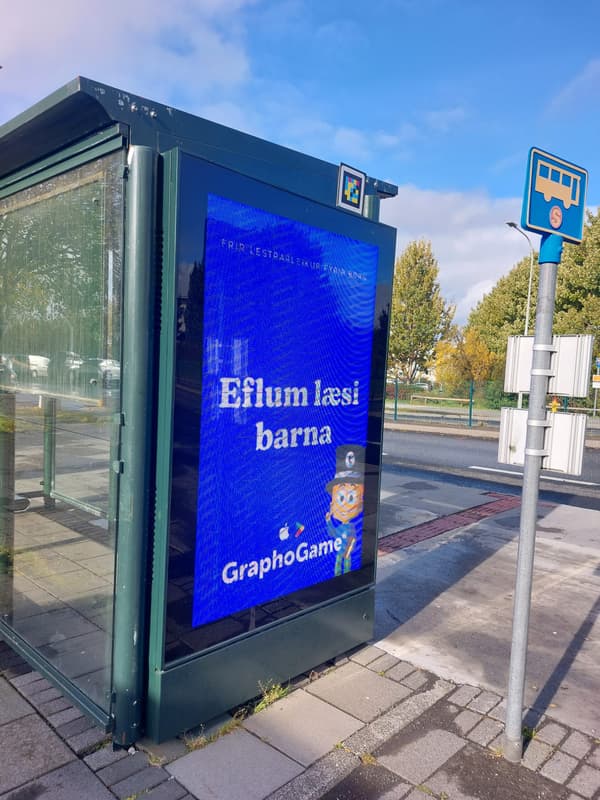
The installation of NaviLens codes at Strætó bus stops has begun, with the first routes 13 and 14—already accessible to blind and visually impaired passengers.
Using NaviLens codes, blind and visually impaired users can independently access information on routes and arrival times without assistance. Through a mobile app, real-time travel information is read aloud, enabling fully independent use. The solution also benefits other passengers, including tourists and people whose first language is not Icelandic.
The project is a collaboration between Strætó and the Icelandic Association of the Visually Impaired, marking a significant step forward in accessibility in public transport. Strætó leads the project and owns and is responsible for the codes, while the Association received government grants from the Minister of Social Affairs and Labor Market and the Minister of Infrastructure for the initial implementation.
The City of Reykjavík has supported the project from the beginning, both in planning and execution, with city staff handling the installation of codes on shelters and poles. Síminn/Billboard has also provided invaluable support by installing codes on all shelters under its management.
In the coming months, installation will expand to additional routes and stops, both in Reykjavík and later in other municipalities.
What are NaviLens codes?
NaviLens codes function similarly to QR codes but offer several advantages:
- They can be detected from up to 12 times greater distances than QR codes.
- They work in low-light conditions and require less precise camera alignment.
- They provide information about stop locations, routes serving the stop, and real-time arrival of the next bus.
Who benefits from the solution?
- Blind and visually impaired users can independently access route and arrival information without relying on others.
- Sighted users can use the NaviLens GO app to access the same real-time information easily.
- Tourists and non-Icelandic speakers receive information automatically in their device language. The app supports over 33 languages.
- People with reading difficulties, such as dyslexia, can benefit from audio playback of information within the app.